



Lumbar Support Belts for Work: Prevention and Pain Relief
Why Use Lumbar Support Belts for Work?
For individuals performing physically demanding tasks—such as lifting heavy loads, standing for long periods, or repetitive movements—lumbar support belts for work can be an excellent preventive and therapeutic solution. These belts help stabilise the lower back region, reducing the risk of injury and providing lumbar support throughout the workday.
Studies show that workers who use appropriate lumbar belts experience fewer episodes of lower back pain and are able to maintain productivity with greater safety. However, it’s essential to choose the right belt for each case and understand when and how to use it.
Benefits of Lumbar Belts in the Workplace
Using a lumbar belt for work can offer various benefits, including:
- Reduced strain on the spine during bending or lifting movements
- Stabilisation of the lumbar region, helping prevent twists or muscle overload
- Postural correction throughout the day, supporting spinal alignment
- Relief from chronic or repetitive strain-related lower back pain
- Prevention of occupational injuries, especially in fields like logistics, construction, and nursing
The best lumbar belt for your back will depend on your professional activity and spinal health.
Types of Lumbar Belts and Their Uses
There are different types of lumbar belts on the market, each designed for specific needs. Below are three recommended options:
1. Sacrolumbar Work Belt – For Injury Prevention
This is a lightweight and easy-to-use belt, ideal for professionals who lift loads or spend long hours standing. It functions as a protective lumbar belt for daily use in preventive situations.
- Features an easy-to-use closure system
- Provides firm support without restricting movement
- Helps distribute body weight evenly
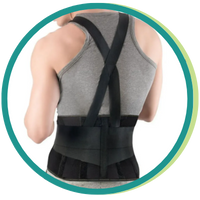
Labor Protection Sacrolumbar Brace
Recommended for people who don’t currently have pain but want to prevent future injuries.
2. Semi-Rigid Sacrolumbar Belt – For Chronic Pain
If you already experience frequent lower back pain, this is an excellent option. The semi-rigid belt offers greater compression and stabilisation, making it ideal for those needing extra support.
- Recommended for persistent lower back pain (lumbalgia)
- Helps relieve pain during physical effort
- Suitable for prolonged and comfortable use
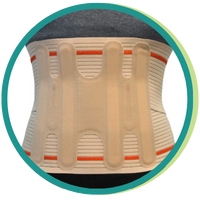
Semi-rigid Sacrolumbar Band
This model can complement physiotherapy or rehabilitation sessions.
3. Lumbamed Facet Lumbar Belt – For Continuous Use
The Lumbamed Facet is designed for more demanding situations such as lumbar instability, osteoarthritis, or herniated discs. It’s meant to be worn not only at work but also throughout daily life.
- Provides continuous lumbar support
- Helps reduce pain and stiffness
- Aids long-term postural retraining
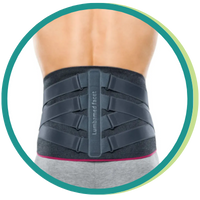
Lumbamed Facet Lumbar Support Belt
This model can also be used in conjunction with a posture corrector, as prescribed by a doctor.
The Importance of Posture Correctors at Work
In addition to lumbar belts, many professionals benefit from using a posture corrector—especially those who sit for long hours. A lumbar posture corrector helps keep the torso aligned, reducing muscle strain and preventing spinal deformities.
Combined use of a posture corrector and a lumbar belt may be recommended in some cases, but it should always be evaluated by a specialist to avoid muscle dependency or improper usage.
How to Choose the Best Lumbar Belt for Work?
When choosing the best lumbar support belt, consider the following:
- Type of professional activity: lifting, walking, or repetitive motions
- Current health condition: existing pain, previous injuries, or history of lower back pain
- Level of support needed: preventive, moderate, or intensive
- Comfort and adjustability: should be easy to wear, comfortable, and allow freedom of movement
How to Use Lumbar Belts Correctly
To ensure their benefits and avoid side effects, lumbar belts must be used properly:
- Avoid wearing them for prolonged periods without breaks to prevent muscle weakening
- Wear the belt only during physically demanding activities, unless advised for continuous use
- Maintain an active posture and complement usage with stretching and strengthening exercises
Lumbar belts do not replace physical exercise or treat the root cause of pain—they are temporary and preventive aids.
When to Consult a Specialist
If you experience persistent pain, stiffness, tingling, or limited mobility, it’s best to consult an orthopaedist or physiotherapist. In some cases, the lumbar belt will be part of a broader treatment plan that may include:
- Therapeutic exercises
- Physiotherapy sessions
- Ergonomic adjustments at the workstation
- Anti-inflammatory medication
Improper use of lumbar belts—such as using the wrong size or relying on them when unnecessary—can lead to muscle dependency and negatively impact natural posture.
Conclusion
Lumbar support belts for work are valuable tools for preventing injuries and relieving pain related to repetitive physical effort. From daily-use belts for spinal protection to more robust models for chronic pain, there is a solution for every need.
If you’d like, I can also create a shorter version for an e-commerce product page, social media, or a promotional campaign.
No Comments