



Arm Sling: Types and When to Use
An arm sling is an orthopedic device used to immobilize and relieve the weight of the arm, especially in cases of injury or during surgical recovery. Its main purpose is to promote healing and prevent movements that could worsen the condition. With several options available on the market, it is essential to understand the types of slings and which one is most suitable for each situation.
What is an arm sling?
An arm sling, also known as a support sling, consists of a strap that supports the forearm and keeps it close to the body. Some advanced models include a chest band, which increases immobilization and stability of the shoulder joint. Its use is common in cases of fractures, dislocations, sprains, or surgeries, and it is prescribed by healthcare professionals to facilitate recovery and provide comfort.
When should an arm sling be used?
An arm sling is recommended in different clinical contexts:
- Fractures of the humerus, forearm, or clavicle
- Traumatic shoulder injuries
- Dislocations and sprains
- Recovery after orthopedic surgeries
- Temporary support after a fall or impact
The level of immobilization required depends on the severity of the injury and medical advice. For mild injuries, a simple sling may be sufficient. In more complex situations, such as dislocations or shoulder post-surgery, it may be necessary to use an arm sling with chest band, which more effectively limits movement.
Types of arm slings available
In the orthopedic market, various models are available, adapted to the needs of each user.
Simple arm sling
The simple arm sling is indicated for mild injuries that do not require full shoulder immobilization. It is made up of a pouch where the forearm rests and an adjustable strap that goes around the neck. Ideal for temporary use or mild pain, this type offers support and rest to the affected area. An example is the breathable arm immobilizer available at Loja Ortopédica, which combines lightness, comfort, and good ventilation.
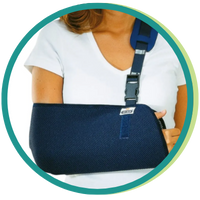
Breathable Arm Immobilizer
Arm sling with chest band
For more severe injuries or post-surgical rehabilitation, the arm sling with chest band is the most recommended choice. This model includes an additional strap that secures the arm to the torso, preventing involuntary movements that could compromise recovery. It is often used in shoulder dislocations or more complex fractures. One of the most popular options is available at Loja Ortopédica, with arm support and shoulder immobilization, which ensures greater stability without compromising comfort.
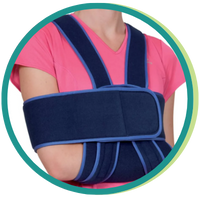
Arm Support with Shoulder Immobilization
Pediatric arm sling
The pediatric arm sling is an orthopedic device used to immobilize and support the arm or shoulder in situations requiring restricted movement, such as fractures, dislocations, sprains, or after surgery. Its purpose is to keep the upper limb in the correct and stable position, promoting healing and reducing discomfort.
This type of sling is adapted to children’s size and anatomy, offering a safe and comfortable fit. It is generally made from lightweight and breathable materials to avoid skin irritation and provide well-being during daily use. Its application must always be guided by a healthcare professional, who will indicate the proper position and duration to ensure effective and safe recovery.
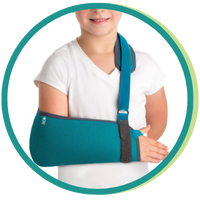
Support for Arm OP1132
How to choose the ideal arm sling?
The choice of model should be based on clinical evaluation and the user’s specific needs. Important factors include:
Type and severity of the injury
Fractures, dislocations, or surgeries require different levels of support. In superficial injuries, a simple arm sling is usually sufficient. For stricter immobilization, the chest band version or complete immobilizers are more appropriate.
Comfort and breathability
Opting for models with breathable fabric is essential, especially for prolonged use. Ventilation prevents heat and moisture buildup, contributing to comfort and preventing skin irritation.
Ease of adjustment
Check if the sling has adjustable straps that allow perfect adaptation to the user’s body. Velcro fastenings, for example, make putting it on and taking it off easier, making its use more practical.
Arm sling with chest band: price and benefits
It is natural to question the price of the arm sling with chest band. Although it may be slightly more expensive than simple models, its effectiveness and safety justify the investment, especially in injuries requiring strict immobilization. By choosing a model like those available at Loja Ortopédica, you ensure a durable, comfortable, and specialist-approved product, with fast delivery and qualified customer support.
Why is proper immobilization important?
Correct immobilization of the arm or shoulder allows:
- Reduction of pain and swelling
- Prevention of unwanted movements that could worsen the injury
- Acceleration of healing and functional recovery
- Improved posture, avoiding incorrect muscle compensation
In addition, following medical recommendations and using the proper support for the prescribed duration is essential to avoid sequelae or relapses.
How long should an arm sling be used?
One of the most common questions among patients and caregivers is: how long should an arm sling be used? The answer may vary depending on the severity of the injury and the physician’s guidance. For mild cases, such as small contusions or sprains, it may be necessary for only a few days. In cases of fractures or post-operative recovery, use may extend for several weeks.
It is essential to follow the exact time prescribed by the healthcare professional. Excessive or inappropriate use of the sling may lead to joint stiffness, muscle weakness, or even delayed recovery.
During this period, it is important to regularly check the fit of the support, ensuring there are no signs of discomfort, excessive compression, or circulation problems. Ergonomic models, such as the arm support with shoulder immobilization, are specially designed to minimize these risks and enable safer recovery.
Can I remove the arm sling to sleep?
This is another frequent question. In some cases, healthcare professionals may allow removal of the arm sling during sleep, provided the patient lies in a safe position that does not compromise the affected area. However, when there is joint instability or a high risk of involuntary movement during the night, it is recommended to keep the sling in place.
The importance of posture and positioning
In addition to the arm sling, it is essential to pay attention to the patient’s overall posture during recovery. The arm should be kept slightly elevated, which helps reduce swelling and improves venous return. When sitting or lying down, supporting the elbow with a pillow can be useful to ensure the weight does not rest directly on the injured joint.
Conclusion
The arm sling is an indispensable ally in the recovery of arm and shoulder orthopedic injuries and surgeries. Whether in a simple version or in an arm sling with chest band, choosing the correct model always depends on the clinical condition, desired comfort, and required level of immobilization.
Models such as the breathable arm immobilizer, the chest band arm sling for shoulder immobilization, or the OP1132 full immobilization support are excellent options for those seeking effectiveness combined with comfort.
Whatever the choice, the most important thing is to ensure safety and complete recovery, supported by high-quality devices and professional healthcare guidance.
No Comments