



Tennis Elbow: What It Is, Symptoms and Effective Treatment
Persistent pain on the outside of the elbow can make simple actions such as picking up a cup, opening a door or working at a computer surprisingly difficult. Although the name suggests an injury that only affects tennis players, tennis elbow can also occur in people who repeatedly perform gripping movements, forearm rotation or wrist extension at work, during sport or in everyday activities.
At Loja Ortopédica®, we explain what tennis elbow is, the most common signs and how rest, exercises, physiotherapy and orthopaedic supports can be combined to promote a safe recovery.
What is tennis elbow?
Tennis elbow, also known as lateral epicondylitis or lateral elbow tendinopathy, affects the tendons that connect the forearm extensor muscles to the outside of the elbow. Repeated movements can cause overload and changes in the tendon, leading to pain and tenderness.
Although the term “epicondylitis” suggests inflammation, many cases mainly involve the tendon having difficulty adapting to load. For this reason, the aim is not to keep the arm completely still, but to temporarily reduce aggravating activities and gradually restore its capacity.
Elbow tendinitis and epicondylitis: are they the same thing?
“Elbow tendinitis” is a common expression used when pain is present, but different tendons and areas of the elbow can be affected. When the pain is located on the outside of the elbow, it is usually referred to as lateral epicondylitis or tennis elbow. Pain on the inside may be medial epicondylitis, also known as golfer’s elbow.
Tennis elbow: most common symptoms
Tennis elbow symptoms tend to develop gradually and may include:
- pain or a burning sensation on the outside of the elbow;
- tenderness to the touch;
- pain that extends down the forearm;
- reduced grip strength;
- discomfort when shaking hands, turning a key, lifting an object or using a computer mouse;
- difficulty fully extending the arm.
The intensity can range from mild discomfort during movement to persistent pain that interferes with sleep or daily activities.
How to treat tennis elbow
In most cases, tennis elbow treatment is conservative and should be adapted to the duration of the symptoms, the person’s professional activity and the level of pain.
1. Reduce overload
Temporarily avoid or adapt the movements that trigger pain. This does not mean completely immobilising the arm, but rather reducing intensity, alternating tasks, taking breaks and correcting technique or posture.
2. Relieve pain
Applying cold or heat, always with a protective layer between the skin and the heat or cold source, may provide relief. Painkillers or anti-inflammatory medication should only be used according to the advice of a doctor or pharmacist, particularly if you have other health conditions or take regular medication.
3. Have physiotherapy
Physiotherapy may include load management, manual therapy and a progressive programme of mobility and strengthening exercises for the wrist and forearm. Forcing painful movements or returning to activity too soon may prolong the symptoms.
4. Use a suitable orthosis
An elbow support or tennis elbow strap can help distribute pressure and reduce the strain felt on the tendon during certain activities. It should fit securely without causing numbness, changes in skin colour or excessive pressure. Discover some of the options available at Loja Ortopédica®.
For more comprehensive support, discover the Orliman Sport Elastic Elbow Support with Gel Pads, made from breathable fabric and designed to provide compression and stability without excessively restricting movement.
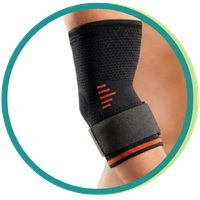
Elastic Elbow Support with Gel Pads Orliman Sport
For more targeted compression on the forearm, discover the Epitec Epicondylitis Strap, which features a moulded pad designed to help reduce overload during professional or sporting activities.
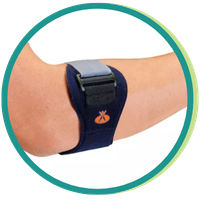
Epitec Epicondylitis Strap
Exercises for tennis elbow
Tennis elbow exercises should be introduced gradually and, preferably, under the guidance of a physiotherapist. Some examples include:
Extensor stretch: with your elbow straight and your palm facing down, gently bend your wrist using the other hand until you feel a stretch in the forearm, without causing severe pain.
Isometric exercise: keep your wrist in a neutral position while the other hand applies resistance, without allowing any movement. Hold for a few seconds and then relax.
Eccentric strengthening: rest your forearm on a table and hold a light weight. Use your unaffected hand to help lift the wrist, then slowly lower it using the affected side.
Stop if you experience sharp pain, tingling or persistent worsening of symptoms. The number of repetitions and the load should be adjusted to your condition.
How long does tennis elbow take to heal?
Improvement may occur within a few weeks, but some cases can take several months. If the pain does not improve after a few weeks of self-care, interferes with sleep or is accompanied by loss of strength, significant swelling or numbness, professional assessment is recommended.
To learn more about the causes, different types of orthoses and other care options, also read our article Epicondylitis: What It Is, How to Treat It, Orthoses and More!.
Can tennis elbow be prevented?
Prevention involves gradually increasing load, strengthening the forearm, taking breaks during repetitive tasks and using appropriate tools or sports equipment.
Tennis elbow can cause pain and limit simple everyday movements, but in most cases recovery is possible with an appropriate and progressive approach. Identifying tennis elbow symptoms at an early stage, temporarily reducing movements that cause pain, performing guided tennis elbow exercises and using a suitable orthosis can help control discomfort and restore arm function. If symptoms persist or worsen, it is important to consult a doctor or physiotherapist to assess the condition and determine the best way to treat tennis elbow.
No Comments